The house
Who lived in this property? From Villa Blanca to Casa Vilá Reyes: a century of history
Meet the family behind Villa Blanca and the textile entrepreneur who commissioned Casa Vilá Reyes, on an estate whose story began in 1909.
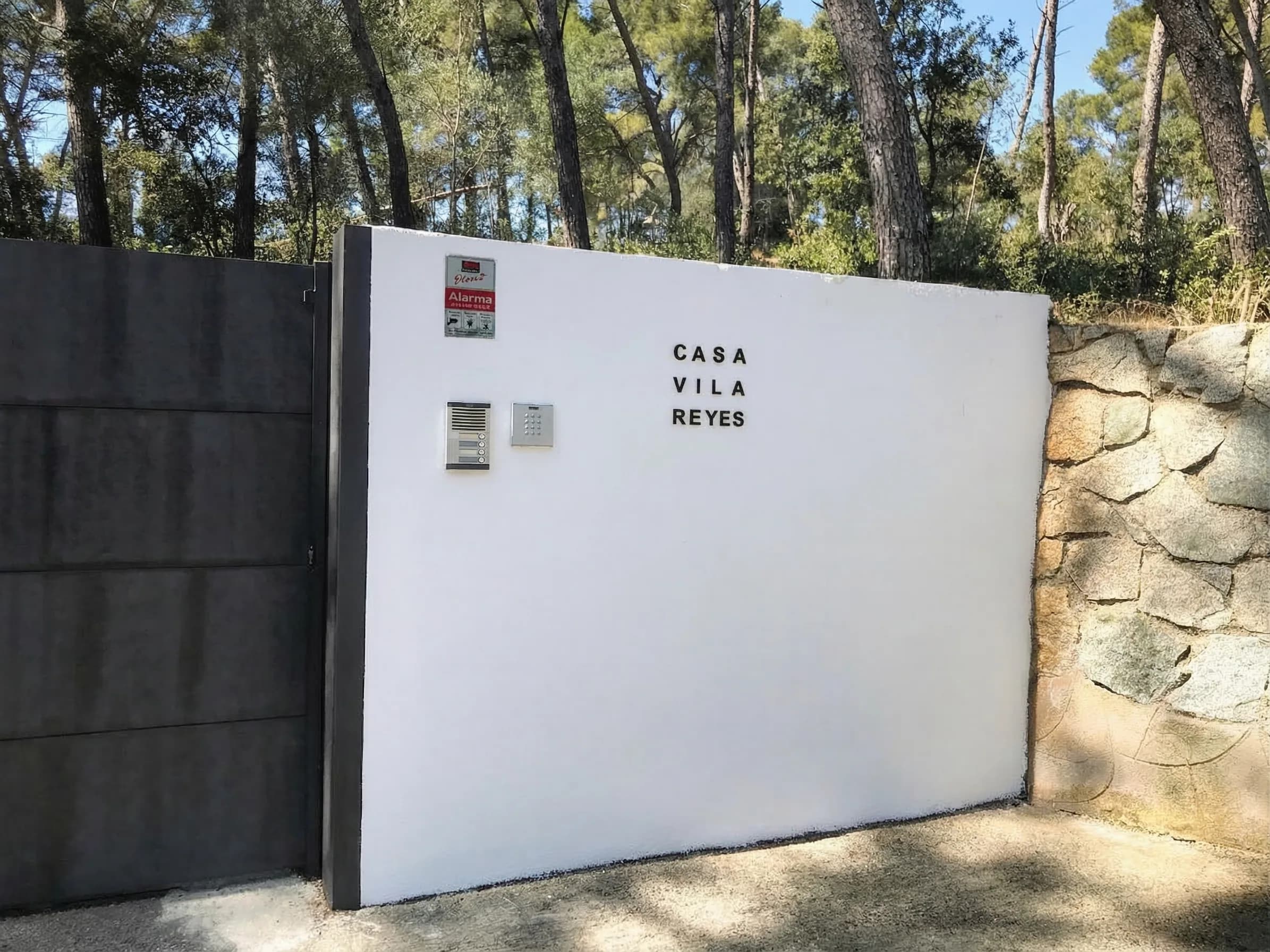
The name above the entrance, Casa Vilá Reyes, belongs to the man who commissioned the house. To get to know him, and how his family came to own this part of Sant Vicenç de Montalt, we need to begin with an older house nearby. The estate was already several decades old when the Vilá family arrived.
The first house and its gardens
In 1909, stockbroker Marcelino Coll Brugada built a house on land between Caldes d’Estrac and the Balís stream. He soon sold it to Joan Pich i Pon, the businessman and politician who would become mayor of Barcelona in 1935.
Pich i Pon called on Josep Puig i Cadafalch to work on the property. In 1922, the architect designed garden lamps and dining-room furniture and worked on the caretaker’s house. Around 1928, Jean-Claude Nicolas Forestier redesigned the gardens, shaping paths and terraces around the slope.
In 1938, the estate took on quite different uses. That May, it housed a children’s summer colony supported by the Mexican embassy. Later in the year, Manuel Azaña, then president of the Spanish Republic, stayed there with his entourage. An air-raid shelter beside the historic house survives from that period.
Blanca, Juan and the division of the estate
After the Civil War, Pich i Pon’s widow, Esperanza Morlans, sold the property to Barcelona textile entrepreneur Juan Vilá Blanco and his wife, Blanca Reyes Planas. During their ownership it became Villa Blanca, a name that, according to the family, honours Blanca.
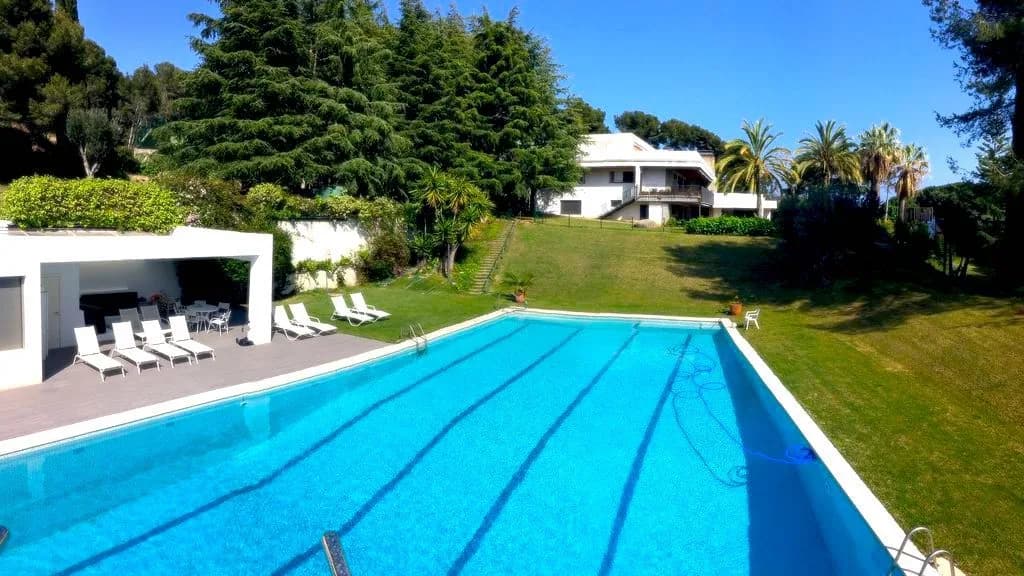
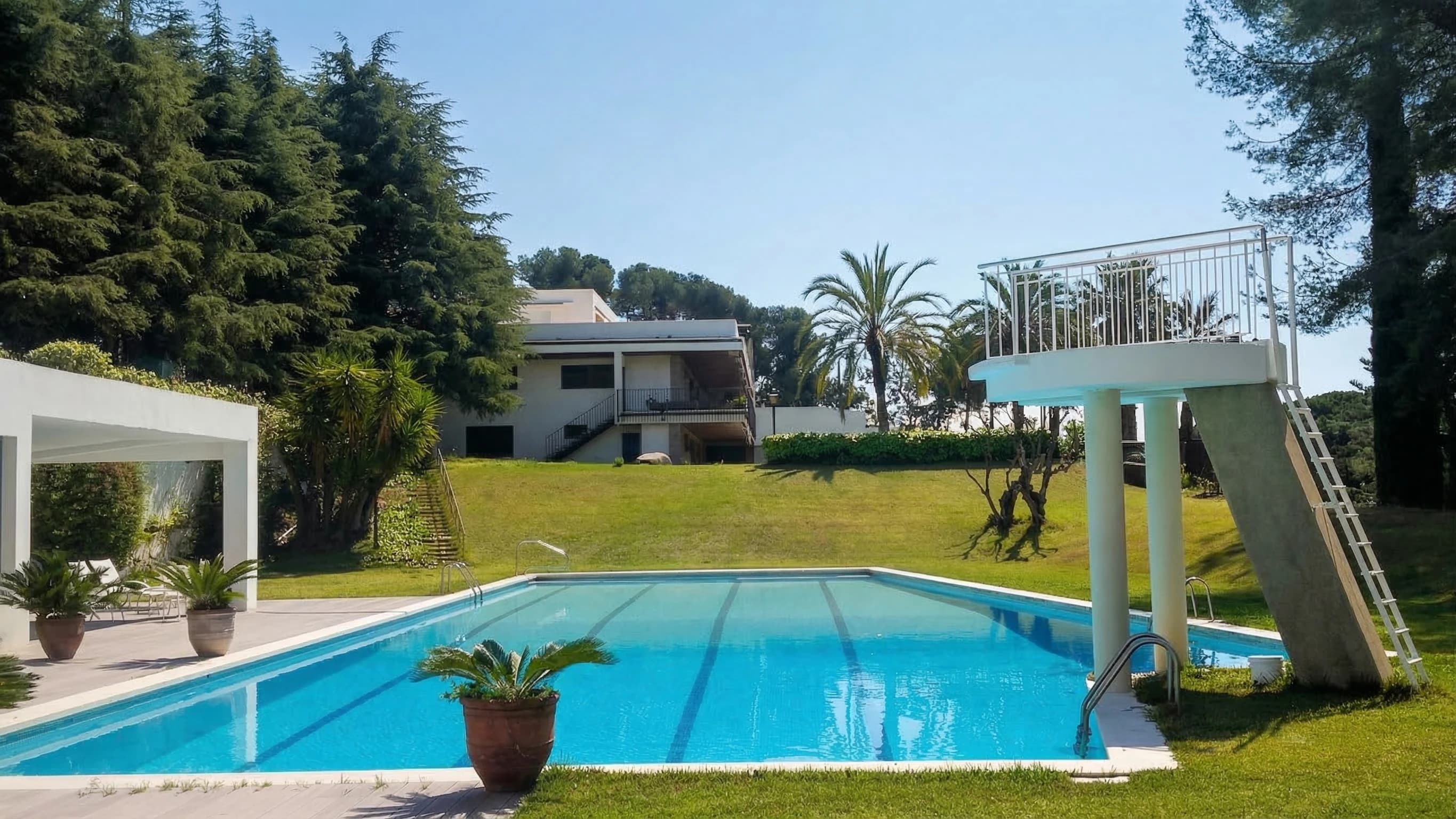
Their daughter, Blanca Vilá Reyes, married Manuel Salvat and kept the original houses when the property was divided. Those houses remained with the Salvat Vilá branch of the family, associated with Editorial Salvat. Her brother, Juan Vilá Reyes, commissioned a new house, swimming pool, Pool House and garden on his part of the estate, set between vineyards and woodland: the Casa Vilá Reyes of today.
Juan Vilá Reyes, from Barcelona to the world
Juan Vilá Reyes made textile innovation the centre of an international industrial enterprise. He founded IWER and, in 1956, Matesa, and drove their expansion into markets around the world. Research and development in Barcelona and manufacturing in Pamplona were the foundations of that undertaking: the IWER shuttleless loom became the product through which Matesa reached beyond Spain.
That reach was matched by a public profile at home. Televisión Española featured him in its popular programme Esta es su vida, bringing the textile entrepreneur’s story into homes across Spain. Between 1967 and 1969, he also served as president of RCD Espanyol.
In 1969, the Matesa affair became a financial and judicial case and a political crisis under the late Franco regime. Historian Fernando Jiménez has examined the institutional and political rivalries it exposed.
The place he commissioned
Back on the family estate, Juan’s commission created a new setting on the hillside. The heritage catalogue attributes the house to L. Alonso and A. Mendoza. Overlapping volumes follow the incline across three levels, with only two visible from either side. The pool, changing rooms and diving board formed part of the same design. The cadastral register records 1,463 square metres of gross built area for the house.
Today, Casa Vilá Reyes welcomes people who come to share a stay, a meal or a celebration. The gallery offers a closer look at the house and its spaces; a house with many lives continues the story with its more recent uses.